
Platform
A pricing brain, an AI voice, and the rails to ship both.
Per borrower, the engine evaluates 10⁶ to 10⁸ micro-computations and returns the top 15 scenarios by total cost of financing. The agent explains them. The platform puts both on any channel in days.
82 first-order configuration dimensions
Higher-order tensors (e.g. the 5-axis ADI insurance table) count as one line each.
The problem, formally
X ∈ ℝ⁸²        borrower + project vector
O ≈ 4,000       offers across 12 banks
T = {1…30}      terms, monthly steps
I = {periodic, single, capitalized}
C = 18 toggles  deferral, step-rate, …

rank_k  P(o,t,i,c,X)   s.t. elig(o,X)
 → payment · total cost · APR · down payment
   · amortization · aids resolved
Full formulation, interactive explorer and 625-pair heatmap
Twin and triple loans alone cross 25 × 25 term pairs per rate pair. This is why spreadsheets and single-bank tools score under 30% reliability.
Agent architecture
The AI moves at AI speed. The engine moves at banking speed. They never block each other.
Four runtime components behind three isolation layers. Every change has a known blast radius.
SIP, RTP, echo cancellation, barge-in
WebSocketIntent, tools, modes, brief assembly. Stateless.
REST + JWTMemory, cross-channel context, idempotency locks
RedisSource of truth for every financial figure
REST · MySQL read-onlyThe agent can read the engine, never modify it.
chat() · structured() · tool_response(). Provider swaps are a config change.
Each capability is a plugin with a manifest and a kill switch.
Text chat
Web widget, WhatsApp. Offer lists, chips. <2s latency.
Inbound voice
Customer calls the bank's number. Short format, barge-in respected.
Outbound voice
Proactive callback to a pre-qualified lead. 6-phase guided journey.
Advanced simulation
Opt-in overlay for exhaustive case gathering and a formal recap.
Release gate
15 canonical borrowers. All must pass.
Before any release, a simulator agent plays each of 15 borrower profiles end to end. Seven binary checks per profile. One failure blocks the deploy.
- Right profile detected
- Right questions asked
- Right tools invoked
- Calculations correct
- Offers coherent
- Language respected
- Final recap complete
| Category | Canonical profiles |
|---|---|
| Employees | P01 permanent · P02 bonus/commission · P03 senior exec · P04 field sales |
| Public sector | P05 civil servant · P06 military · P07 public retiree · P08 private retiree |
| Self-employed | P09 liberal profession · P10 merchant/craftsman · P11 auto-entrepreneur |
| Directors | P12 company director · P13 majority partner |
| Non-residents | P14 Europe · P15 North America / Gulf |
Deployment
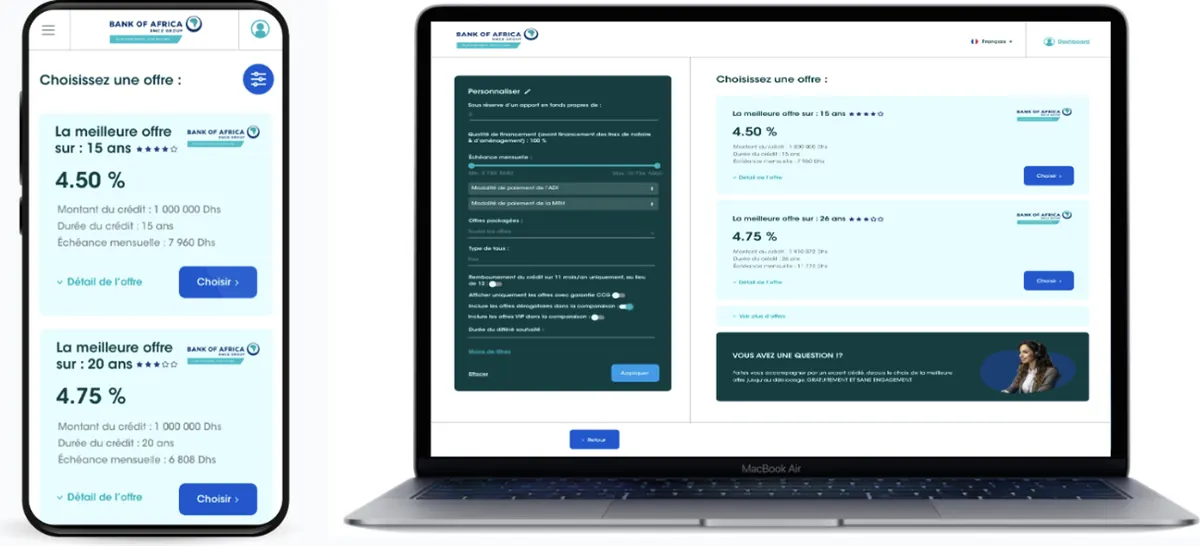
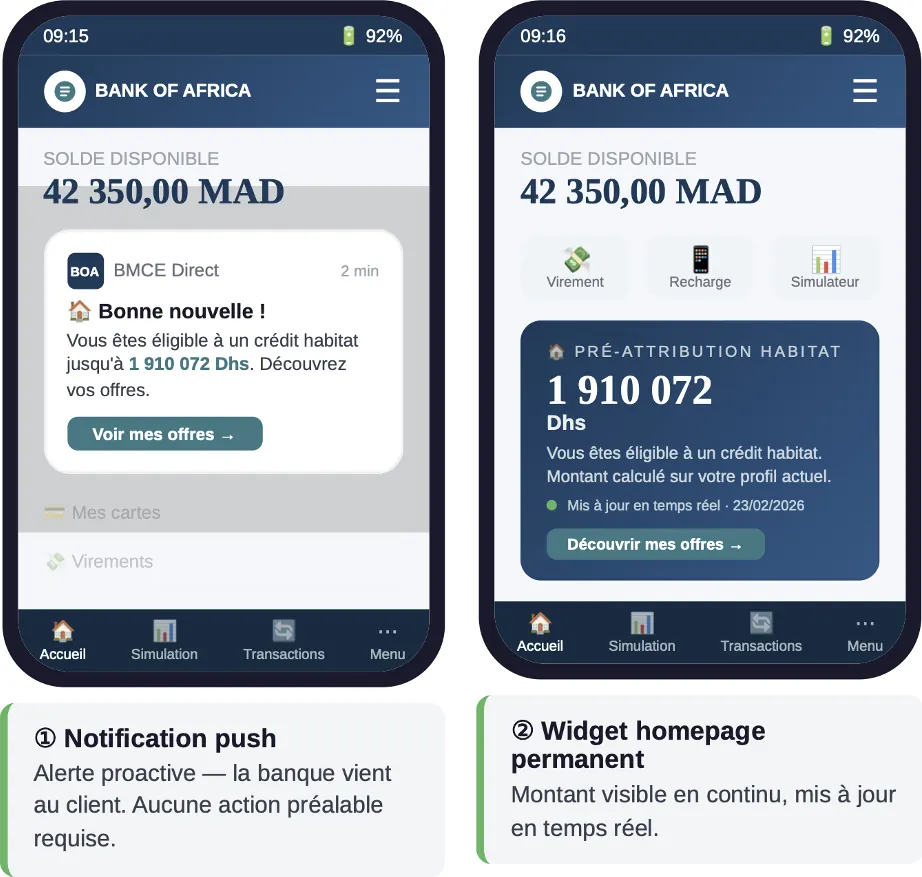
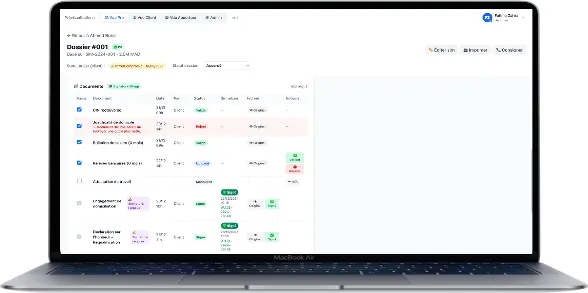
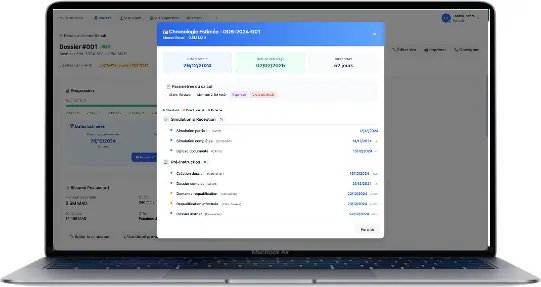
One backend. Every touchpoint.
Web
Institutional site and standalone landing pages for paid acquisition.
Mobile app
WebView or native SDK inside the mobile banking app.
Branch & kiosk
Banker UI and a customer-facing kiosk with avatar.
Real-estate partners
Co-branded simulator on developer and broker sites.
Employer intranets
Widget with pre-filled convention data.
Foundations & programs
Direct eligibility web services with housing programs.
| Bank build or generic RFP vendor | AFDAL | |
|---|---|---|
| Time to first simulation | 12–18 months for a partial v1 | Minutes to hours per channel |
| Catalog coverage | 1–2 alternatives surfaced | 100% of catalog, 15–20 ranked alternatives |
| Rule changes | New dev ticket and quote each time | No-code back office, bank self-serve |
| Cost envelope | $2M–$20M+ over 3–5 years | Annual SaaS license, all-inclusive |
| Roadmap | Only what the RFP asked for | Continuous releases for every bank |
Activate AFDAL for your institution.
Choose your modules, get sandbox keys and an embed snippet in minutes. A deployment lead joins you for go-live.